
A student can own four reference books and still feel lost in a three-mark question. Another can work patiently through one prescribed textbook, practise from memory, and write with surprising clarity. The difference is rarely the size of the book stack. It is whether every resource has a clear job.
The useful question is not simply, “Is NCERT enough?” It is: “What am I trying to improve right now—understanding, recall, written application, numericals, or exam judgement?” Once that is clear, choosing a resource becomes much easier.
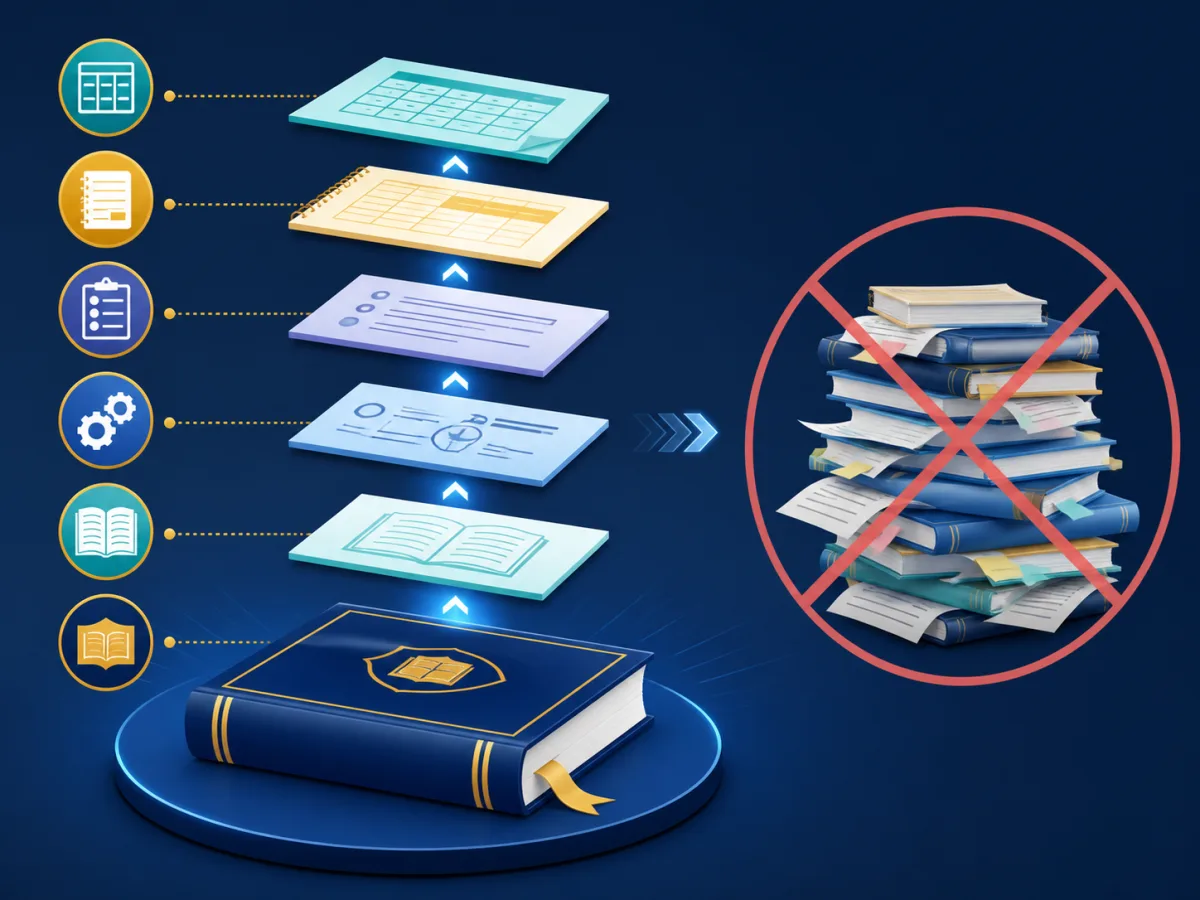
Begin with the prescribed source, not the most popular book
For CBSE Class 10 Science, NCERT is a primary textbook and the current CBSE curriculum should define what is in scope. For RBSE, the current RBSE syllabus, prescribed books and school directions take priority. Students should never assume that one board's chapter list or paper direction automatically applies to another.
A prescribed textbook does more than provide definitions. Its activities, diagrams, worked relationships, examples and exercise questions reveal how the subject is organised. Skipping them and reading a condensed guide first can create knowledge that sounds familiar but breaks when a question changes its wording.
What each resource is actually good for
| Resource | Best contribution | Warning sign |
|---|---|---|
| Prescribed textbook / NCERT | Core explanations, official terminology, activities, diagrams and foundational questions. | You know highlighted lines but cannot explain the activity or diagram. |
| Class notes | Teacher emphasis, clarification, organised revision and common mistakes. | You copy pages without testing recall. |
| Reference book | Additional examples, graded numericals and varied questions after concepts are clear. | You switch books whenever a question feels difficult. |
| Sample paper / PYQs | Paper language, time management, mark demand and answer selection. | You count papers attempted but do not analyse errors. |
When NCERT and school material may be sufficient
You may not need another book when you can explain every syllabus concept in your own words, solve prescribed exercises without copying, reproduce important diagrams and equations, and handle official sample or previous-paper questions at the expected level. In that situation, a larger book can add volume without fixing a real weakness.
“Enough” never means reading the chapter once. It means the resource has been converted into retrievable knowledge and written performance.
When one reference book can genuinely help
- Numerical fluency: you understand Electricity or Light but need a carefully graded set of calculations.
- Application practice: direct questions are comfortable, but unfamiliar cases, graphs or experiments cause hesitation.
- Answer comparison: you need examples showing how much scientific detail is appropriate for different mark values.
- Structured extension: the prescribed exercises are complete and an additional question bank has a clear, syllabus-aligned purpose.
Choose one resource for that purpose. Do not buy three books that repeat the same question patterns. Before spending money, examine a chapter: is the explanation accurate, is the difficulty graded, are answers reasoned rather than merely printed, and does it match the current syllabus?
The two-book trap
Students often keep NCERT open on one side and a guide on the other, moving sentence by sentence between both. It feels thorough, but attention is fragmented. A better sequence is to learn a small textbook section, close it, recall it, solve its questions, and only then use the second source to repair a specific gap.
A resource becomes valuable when it changes what you can explain, draw, calculate or write—not when it increases the number of pages on your desk.
A practical decision test before buying another book
- Write the chapter name and the exact weakness you want to solve.
- Attempt five suitable questions without help.
- Classify the errors: concept, memory, interpretation, calculation or answer writing.
- Check whether the textbook, teacher feedback or existing notes already address that error.
- Use a reference book only if it adds the missing practice in a clear, current and accurate form.
A balanced weekly resource routine
On the first study session, read and question the prescribed chapter. During the next session, retrieve definitions, reactions, diagrams and relationships from memory. Then solve textbook questions. Later in the week, attempt a small set of application or numerical questions. Finish by reviewing errors and retesting them after a gap.
This sequence gives every resource a role and prevents the common cycle of reading more while remembering less.
Useful next steps
Open the Class 10 Science Notes hub for available chapter-wise English and Hindi resources. Then use the guide on reading NCERT Science actively. For written performance, continue with how to write high-scoring Science answers.
Frequently asked questions
Is NCERT enough for Class 10 Science?
It is a primary CBSE resource, but successful preparation also includes the latest syllabus, teacher guidance, diagrams, written practice and suitable exam questions. RBSE students should follow their own current prescribed sources.
Should I read a reference book before NCERT?
Usually no. Begin with the prescribed source so vocabulary, scope and foundational reasoning remain clear. Use another book afterward for a defined weakness.
How many reference books should I use?
For most students, one carefully chosen supplementary source is more useful than several overlapping books. Mastery and error correction matter more than collection size.